
Tropical Villa Architecture in Costa Rica
Casa Manuel Antonio
The central challenge of tropical villa architecture is not how to make a building look dramatic.
It is how to build comfort without blocking the reason the site matters. In Manuel Antonio, that reason is the Pacific view through rainforest canopy: ocean, sunset, jungle, humidity, breeze, and wildlife all present at once.
Casa Manuel Antonio was designed around a simple principle: the architecture should frame the setting, not compete with it.
Quick Design Summary
| Element | Architectural role |
|---|---|
| Hillside site | Creates multi-level terraces and ocean views |
| West-facing orientation | Frames Pacific sunsets |
| Large glass openings | Dissolve the boundary between interior and exterior |
| Timber ceilings | Add warmth and visual weight |
| Concrete structure | Provides durability and clarity in a tropical climate |
| Infinity pool | Aligns the water edge with the horizon |
| Dense planting | Keeps the villa embedded in the rainforest |
| Terraces | Turn the slope into usable outdoor rooms |
The Site: Why the Hillside Matters
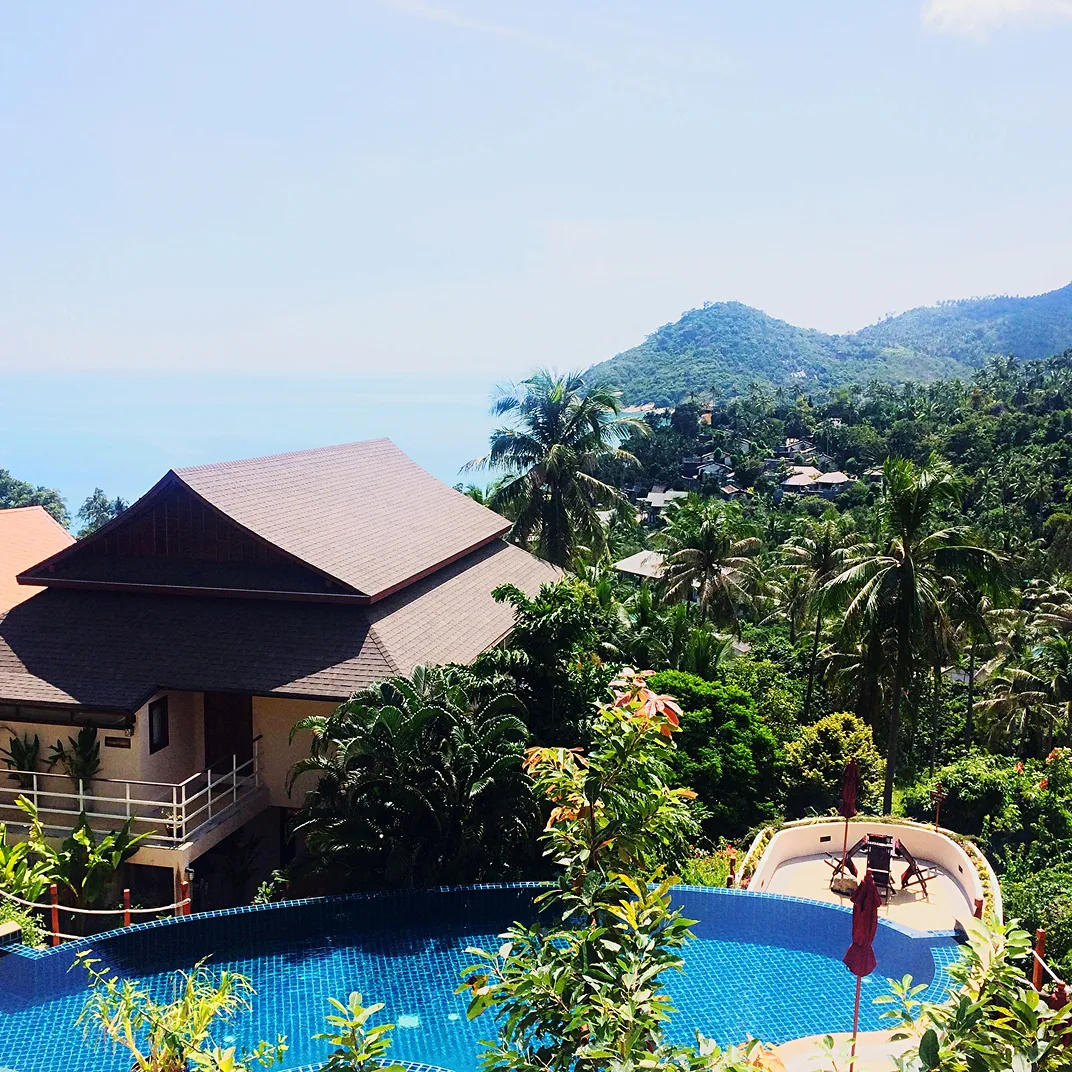
Casa Manuel Antonio sits on a hillside above the Pacific side of Manuel Antonio. The slope is not incidental. It defines the architecture.
A flat site would produce a very different building: one level, one primary terrace, one relationship to the view. A hillside creates layers. Rooms can step down the slope. Terraces can occupy different elevations. The pool can sit at the right height for the horizon. Bedrooms can have different relationships to the forest and ocean.
The result is a villa that feels less like a single object and more like a sequence of viewpoints.
Orientation: Designing Around the Pacific
In a tropical destination, view is not a decorative feature. It is the organizing principle.
The primary social spaces at Casa Manuel Antonio are oriented toward the Pacific. The goal is not only to see the ocean, but to experience the changing light: clear mornings, dense midday brightness, late-afternoon gold, sunset, and the dark line of the horizon after rain.
A west-facing view has consequences. It must be managed with overhangs, shaded terraces, ventilation, and material choices that can handle heat, humidity, and sun exposure.
Good tropical architecture is not just open. It is selectively open.
Indoor-Outdoor Living Without Losing Shelter
The phrase indoor-outdoor living is overused in luxury real estate. In Manuel Antonio, it has a specific meaning.
The building has to allow air, sound, view, and movement while still protecting against rain, insects, heat, and humidity. That requires more than sliding glass doors. It requires covered terraces, deep rooflines, practical circulation, durable materials, and rooms that can be comfortable open or closed.
The best spaces are not entirely indoors or outdoors. They are transitional.
The Role of Timber
Timber is the warmth in the project.
Concrete and glass can become cold in a luxury villa if they are not balanced by natural material. The timber ceilings at Casa Manuel Antonio give the interiors visual weight and a sense of shelter. They also make the rooms feel rooted in the tropics rather than imported from a generic contemporary architecture playbook.
The ceiling plane matters because guests spend much of their time looking outward. The interior should support that outward gaze without disappearing completely.
Glass as a Boundary, Not a Wall
Glass is used where the view is the priority.
The goal is not to show off transparency for its own sake. It is to make the transition from room to terrace to forest to ocean feel continuous. In the primary spaces, glass allows the Pacific to remain present even when the room is cooled, shaded, or protected from rain.
In more private or service-oriented areas, opacity and screening matter more. Good design knows when not to use glass.
Terraces as Outdoor Rooms
The terraces are not leftovers.
In a hillside tropical villa, outdoor space is the architecture. Terraces create the places where guests actually live: morning coffee, afternoon reading, children’s snacks after swimming, drinks at sunset, late dinners, quiet time after everyone else has gone to bed.
Each terrace has a slightly different job:
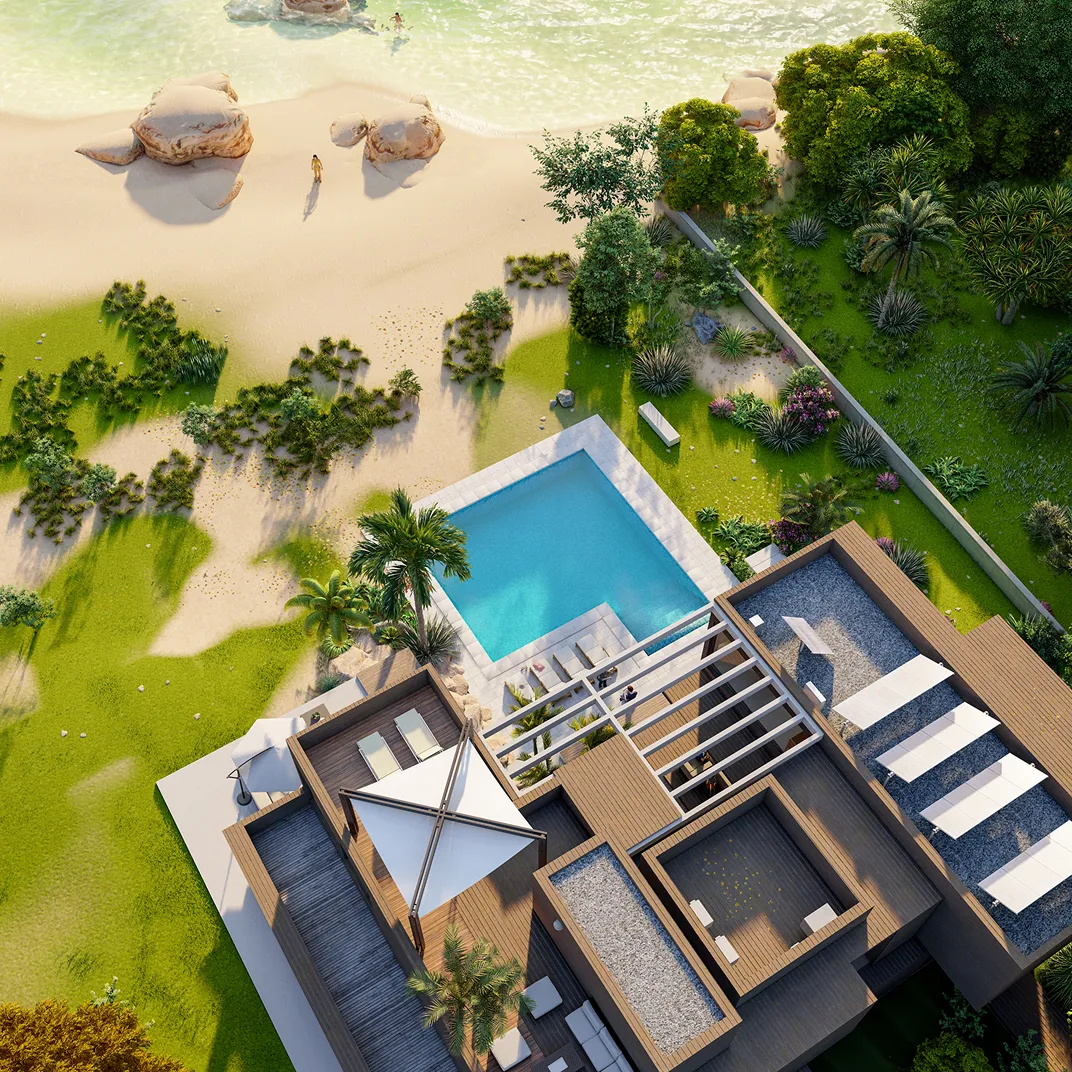
- Pool terrace for group gathering
- Bedroom terraces for privacy
- Dining terrace for long meals
- View terraces for sunset
- Garden-level areas for closer contact with the landscape
The slope makes this possible.
The Infinity Pool
The infinity pool is the most photographed architectural feature because it compresses the whole idea of the property into one image: water, horizon, sky, and forest aligned.
An infinity edge only works when geometry is precise. The pool edge, terrace height, viewer position, and horizon must relate correctly. If the edge is too high, it feels like a wall. Too low, and the illusion weakens. The best version feels inevitable, as though the pool was always meant to sit exactly there.
At Casa Manuel Antonio, the pools are not simply amenities. They are among the primary ways the architecture interprets the site.
Material Choices for the Tropical Pacific
Tropical materials have to perform.
A coastal rainforest climate is punishing: humidity, salt air, UV exposure, heavy rain, insects, and constant biological growth. Materials that look good on day one can fail quickly if they are chosen only for photographs.
The palette at Casa Manuel Antonio emphasizes:
- Concrete for structure and durability
- Timber for warmth and shade
- Stone for cool underfoot surfaces
- Glass for view corridors
- Metal and exterior finishes selected for exposure
- Dense planting that belongs to the climate rather than fighting it
The intent is not pristine perfection. It is graceful aging.
Landscape: Keeping the Villa in the Rainforest
The landscape strategy is as important as the building.
A villa in Manuel Antonio should not feel like a manicured object dropped into the jungle. It should feel embedded. Planting helps with privacy, cooling, wildlife habitat, and the visual transition between architecture and forest.
Dense planting also changes the guest experience. The villa becomes a place where birds move through the canopy, monkeys pass near the property, and the boundary between designed space and habitat remains porous.
Why This Is Not Resort Architecture
Resort architecture often tries to create a controlled fantasy of place.
Casa Manuel Antonio is different. It is designed for a private group, not anonymous circulation. The goal is not to process guests through lobbies, restaurants, and branded amenities. The goal is to support a specific way of living for a week: shared meals, views, privacy, pool time, wildlife encounters, and evenings that slow down.
That is why the villa format matters. The architecture is not just seen. It is used.
Frequently Asked Questions
What is tropical villa architecture?
Tropical villa architecture is design adapted to warm, humid climates through orientation, shading, ventilation, durable materials, and strong indoor-outdoor relationships.
What makes Casa Manuel Antonio’s architecture distinctive?
The villa is organized around a Pacific hillside view, with terraces, glass, timber ceilings, and an infinity pool designed to connect the interiors to the rainforest and ocean.
Why are terraces important in tropical design?
Terraces create shaded outdoor living space, which is often more important than fully enclosed space in a tropical climate.
Why use timber in a contemporary villa?
Timber adds warmth, texture, and a sense of shelter that balances concrete, glass, and open views.
Is the villa designed more for views or privacy?
Both. The main spaces prioritize the ocean view, while planting, elevation changes, and room placement preserve privacy.
How does the architecture support a luxury villa stay?
It creates shared gathering areas, private bedroom zones, outdoor rooms, and a strong relationship to the view and landscape.
Our Take
The best tropical architecture does not fight the site. It edits it.
Casa Manuel Antonio is designed to make the Pacific, rainforest, slope, breeze, and sunset feel more legible. The building provides shelter, comfort, and privacy, but the main event remains the place itself.
For the travel case behind the architecture, read Why Manuel Antonio Is Costa Rica’s Best Luxury Villa Destination and the full Manuel Antonio Costa Rica guide.