
How Casa Manuel Antonio uses contemporary tropical architecture: ocean-view orientation, indoor-outdoor living, timber ceilings, glass, terraces, pool geometry, and materials chosen for Costa Rica's Pacific climate.
The central challenge of tropical villa architecture is not how to make a building look dramatic.
It is how to create comfort without blocking the reason the site matters.
In Manuel Antonio, that reason is the Pacific view through rainforest canopy: ocean, sunset, jungle, humidity, breeze, wildlife, and changing light all present at once.
Casa Manuel Antonio was designed around a simple principle: the architecture should frame the setting, not compete with it.
That is one of the things we love most about the house. The villa is large, but the experience is not about showing off the building. It is about letting the landscape do most of the work.
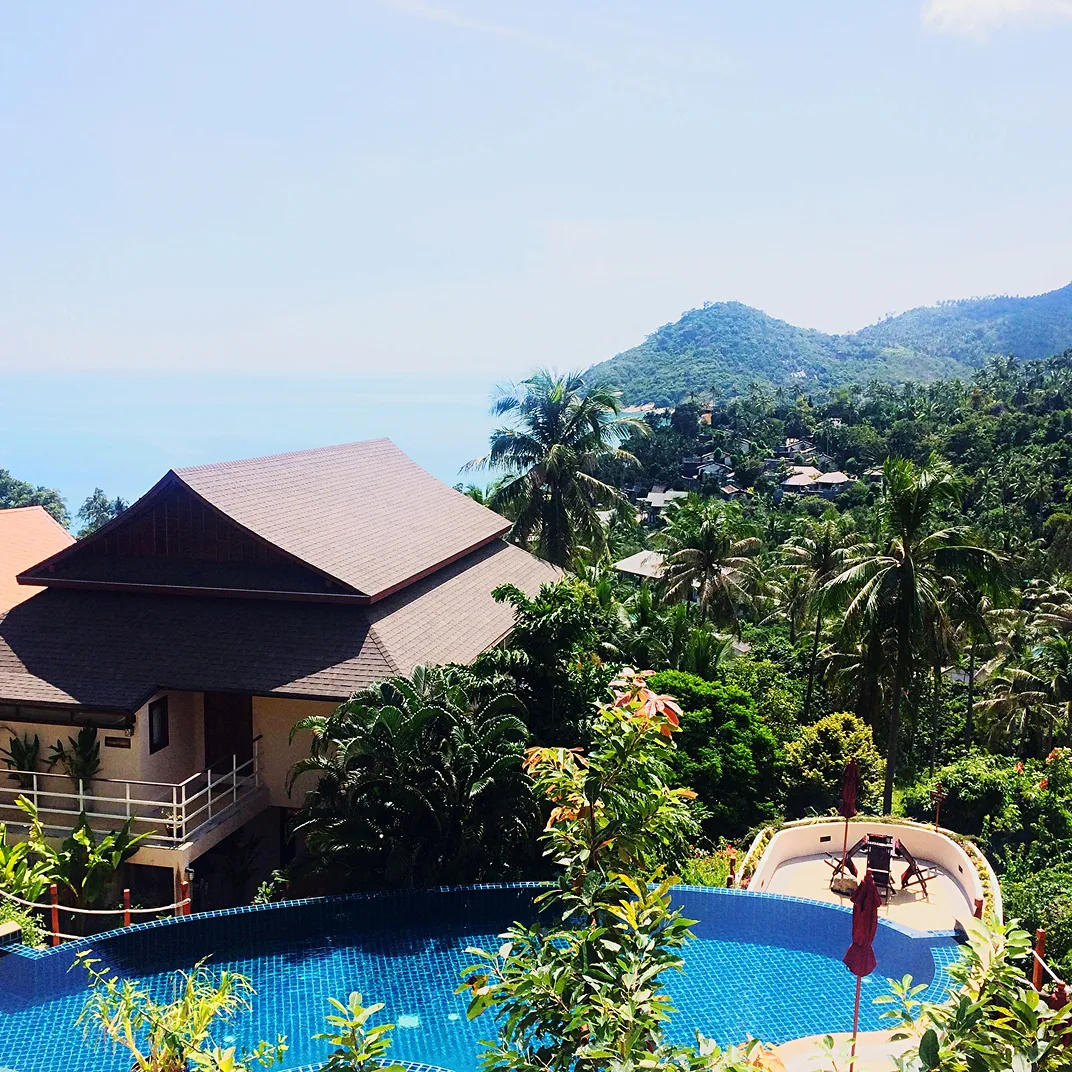
Casa Manuel Antonio sits on a hillside above the Pacific side of Manuel Antonio. The slope is not incidental. It defines the architecture.
A flat site would produce a very different building: one level, one primary terrace, one relationship to the view. A hillside creates layers.
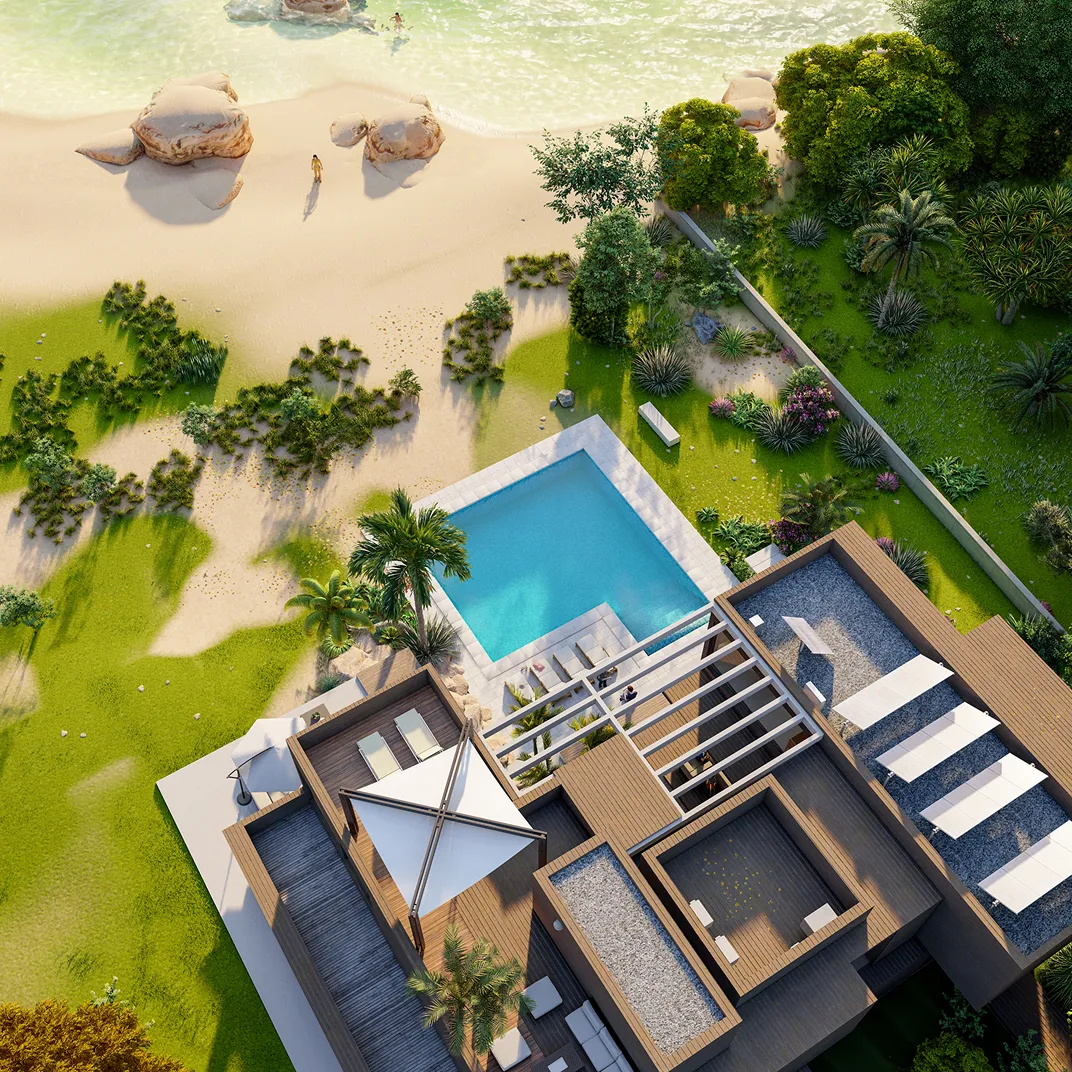
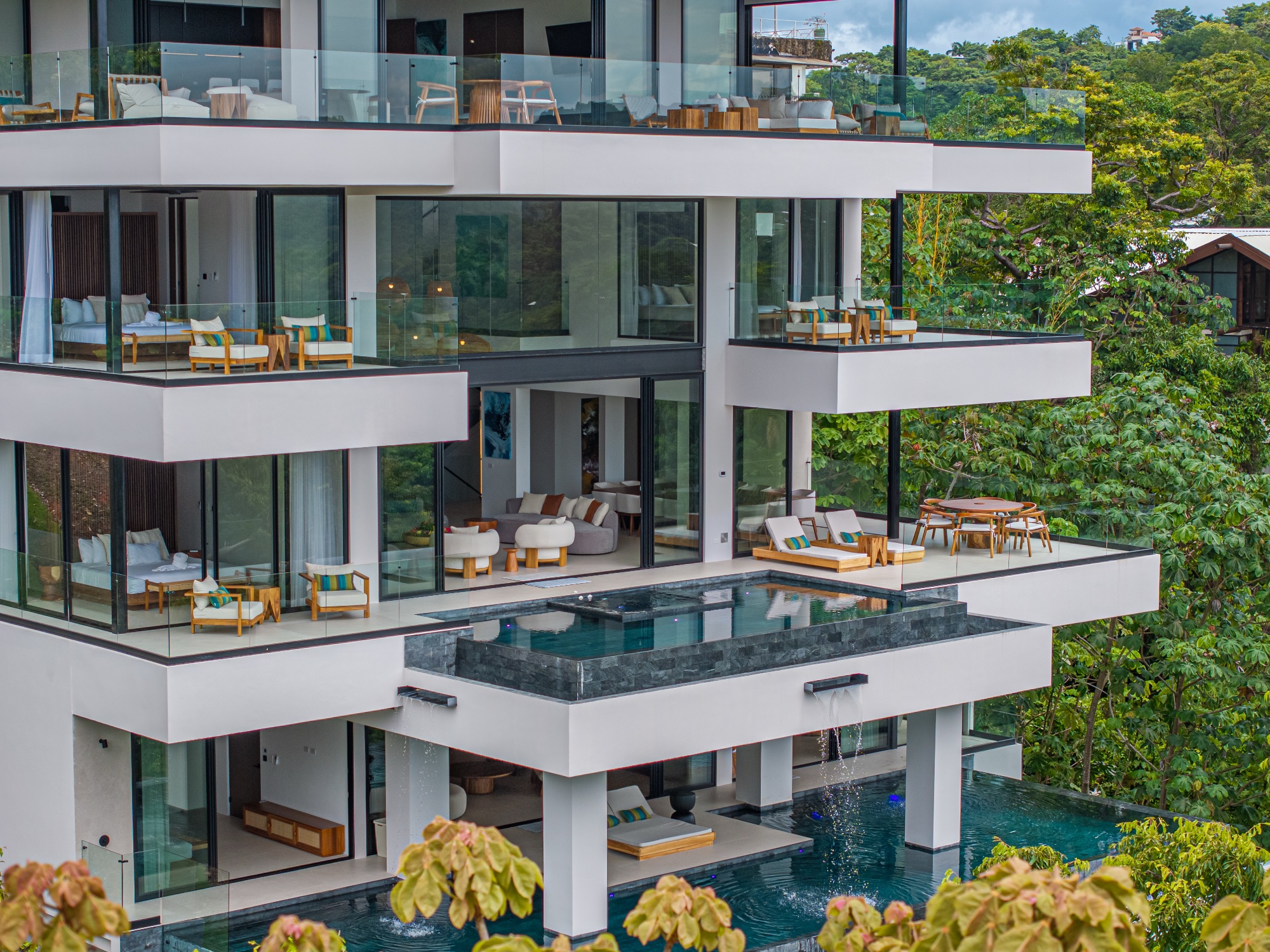
At Casa Manuel Antonio, the design is a series of connected pavilions stepping down the slope across eleven levels. Ten ensuite bedrooms occupy different elevations, each with its own relationship to forest and ocean. Terraces sit at different heights. The pool meets the horizon at the right line.
The result is a villa that feels less like a single object and more like a sequence of viewpoints.
That sequence matters when a group is staying together. People can gather in the main spaces, disappear to quieter terraces, or find their own relationship to the view.
In a tropical destination, view is not a decorative feature. It is the organizing principle.
The primary social spaces at Casa Manuel Antonio are oriented toward the Pacific. The goal is not only to see the ocean, but to experience the changing light: clear mornings, dense midday brightness, late-afternoon gold, sunset, and the dark line of the horizon after rain.
The view never really gets old. We have watched the sky change over the Pacific countless times and still find ourselves stopping when the light starts to shift.
A west-facing view has consequences. It must be managed with overhangs, shaded terraces, ventilation, and material choices that can handle heat, humidity, and sun exposure.
Good tropical architecture is not just open. It is selectively open.
The phrase indoor-outdoor living is overused in luxury real estate. In Manuel Antonio, it has a specific meaning.
The building has to allow air, sound, view, and movement while still protecting against rain, insects, heat, and humidity. That requires more than sliding glass doors. It requires covered terraces, deep rooflines, practical circulation, durable materials, and rooms that can be comfortable open or closed.
The best spaces are not entirely indoors or outdoors. They are transitional.
That is especially important in green season, when the rain can become part of the experience. A good tropical house does not fail when it rains. It gives you protected places to enjoy it.
Timber is the warmth in the project.
Concrete and glass can become cold in a luxury villa if they are not balanced by natural material. The timber ceilings at Casa Manuel Antonio, in locally sourced hardwood over flush stone floors, give the interiors visual weight and a sense of shelter.
They also make the rooms feel rooted in the tropics rather than imported from a generic contemporary architecture playbook.
The ceiling plane matters because guests spend much of their time looking outward. The interior should support that outward gaze without disappearing completely.
Glass is used where the view is the priority.
The goal is not transparency for its own sake. It is to make the transition from room to terrace to forest to ocean feel continuous. In the primary spaces, glass allows the Pacific to remain present even when the room is cooled, shaded, or protected from rain.
In more private or service-oriented areas, opacity and screening matter more. Good design knows when not to use glass.
That restraint is important. In the tropics, too much glass in the wrong place can make a house less comfortable, not more luxurious.
The terraces are not leftovers.
In a hillside tropical villa, outdoor space is the architecture. Terraces create the places where guests actually live: morning coffee, afternoon reading, children's snacks after swimming, drinks at sunset, late dinners, quiet time after everyone else has gone to bed.
Each terrace has a slightly different job:
The slope makes this possible.
For group travel, this matters enormously. A large villa should not force everyone into one shared space all day. It should allow togetherness and retreat.
The infinity pool is the most photographed architectural feature because it compresses the whole idea of the property into one image: water, horizon, sky, and forest aligned.
An infinity edge only works when geometry is precise. The pool edge, terrace height, viewer position, and horizon must relate correctly. If the edge is too high, it feels like a wall. Too low, and the illusion weakens. The best version feels inevitable.
At Casa Manuel Antonio, the pool is not just a visual feature. It is where the daily rhythm often gathers: post-national-park swims, slow afternoons, children playing after a morning activity, and sunset conversations that run longer than expected.
The Central Pacific climate is beautiful but demanding.
Materials must handle sun, humidity, salt air, heavy rain, insects, and constant indoor-outdoor use. In that environment, architecture cannot rely only on appearance. It has to be durable and practical.
Important material choices include:
The goal is not to make the villa feel overprotected from the tropics. The goal is to make the tropical setting comfortable enough to live in.
In Manuel Antonio, landscape is not decoration.
The rainforest is part of why the site matters. Dense planting, canopy, birds, monkeys, insects, and the constant presence of green are all part of the experience.
Casa Manuel Antonio is designed to feel embedded in that landscape rather than placed on top of it. The building steps with the slope, and the planting helps soften the scale of a large house.
That relationship is also what makes wildlife feel so present. The architecture creates comfort, but the forest remains close.
Tropical architecture has to respect maintenance.
Humidity, rain, vegetation, sun exposure, drainage, and insects all create long-term demands. A beautiful house that ignores those realities will age badly.
That is why overhangs, drainage, service access, air movement, durable materials, and simple structural clarity matter. They are not glamorous, but they are what allow a villa to work in a place like Manuel Antonio.
The best tropical design is both romantic and pragmatic.
Casa Manuel Antonio is not designed like a resort building.
Resort architecture often organizes guests around standardized amenities and controlled public spaces. A private villa has a different job. It has to support one group at a time, with privacy, flexibility, and a stronger sense of ownership during the stay.
That is why the terraces, bedrooms, dining spaces, pool, and circulation matter so much. They allow a group to use the house in different ways throughout the day.
The experience is more personal. Morning coffee is not in a hotel breakfast room. Dinner is not at a restaurant table. Sunset is not shared with strangers unless you choose it.
It is your house for the week.
Tropical villa architecture is design shaped by warm climate, humidity, rain, shade, ventilation, indoor-outdoor living, durable materials, and landscape integration.
The villa is organized around a hillside Pacific view, with stepped pavilions, terraces, timber ceilings, glass openings, an infinity pool, and dense rainforest planting.
Terraces create shaded outdoor rooms that allow guests to live outside comfortably while still having protection from sun and rain.
Timber adds warmth, texture, and a sense of shelter. It balances the cooler qualities of glass, stone, and concrete.
Both. The main spaces frame the ocean and sunset, while the stepped layout and separate terraces create privacy within a large group stay.
It gives groups space to gather, retreat, dine, swim, watch wildlife, and experience the Pacific view without leaving the property.
The best thing about Casa Manuel Antonio's architecture is that it does not try to outshine Manuel Antonio.
The house is comfortable, dramatic, and designed for groups, but the real subject is still the setting: rainforest, wildlife, Pacific light, and sunset.
For us, that is what good tropical villa architecture should do. It should make the destination easier to feel, not harder.